
Feb 20, 2026
When building a home, most people focus on the visible details like flooring, cabinets, or paint colors. But what lies beneath your home is just as important. The foundation supports everything above it, and one of the most common foundation styles in residential construction is the slab foundation.
If you are researching the types of slab foundations, you are likely planning a new build or trying to understand the structure of your existing home. Either way, knowing the differences can help you make informed decisions.
Let’s break it down.
What Is a Slab Foundation?
A slab foundation is a thick layer of concrete poured directly onto the ground. It serves as the base of the home and eliminates the need for a basement or crawl space.
Before pouring the slab, contractors typically:
- Level and compact the soil
- Install gravel for drainage
- Place reinforcement such as rebar or wire mesh
- Pour and cure the concrete
Slab foundations are popular because they are cost effective, durable, and relatively quick to install.
Now let’s explore the main types of slab foundations used in residential construction.
Monolithic Slab Foundation
One of the most common types of slab foundations is the monolithic slab.
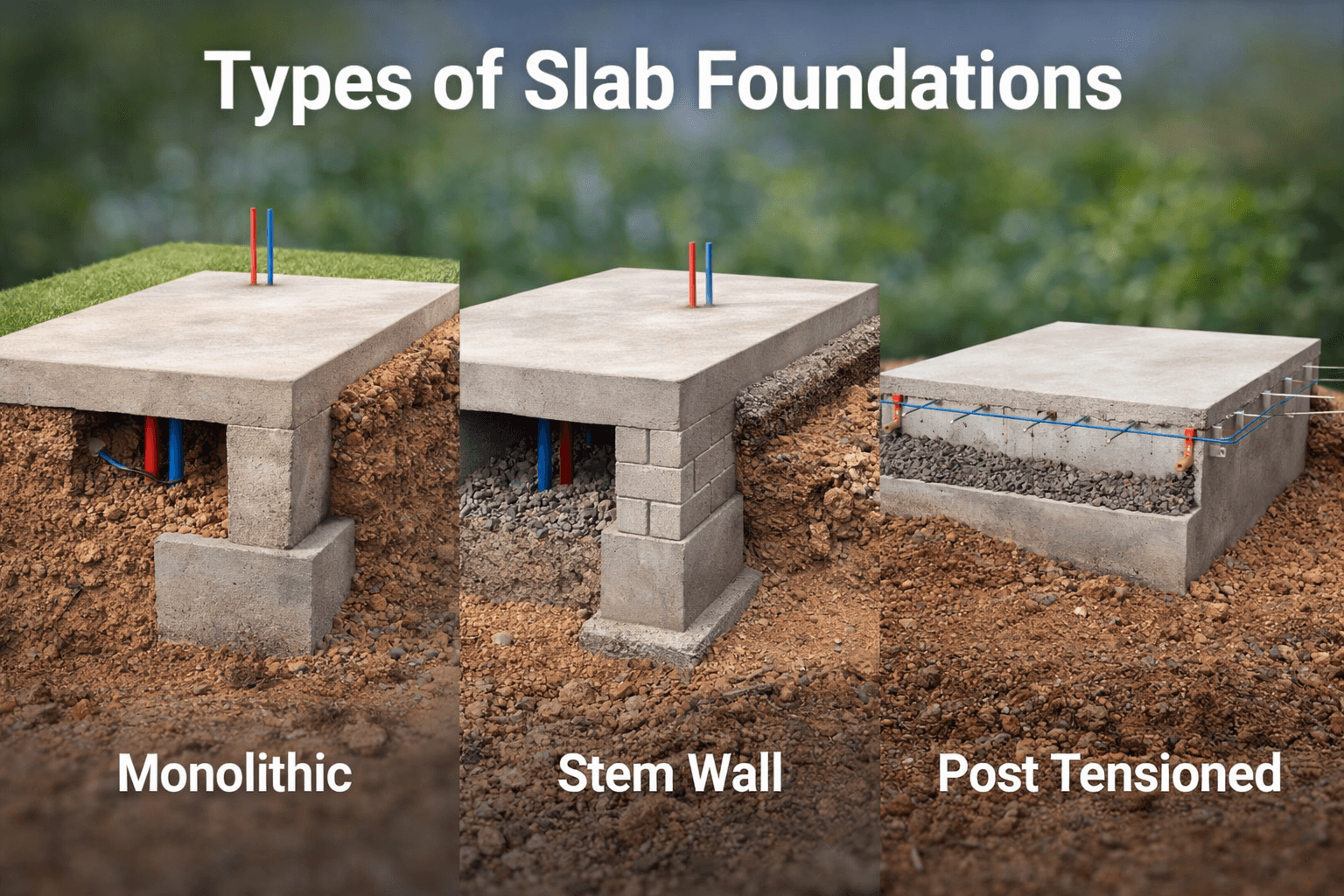
This type is poured all at once in a single concrete pour. The footing and slab are formed together, creating a unified structure.
Advantages include:
- Lower construction cost
- Faster installation
- Strong, continuous support
Monolithic slabs are often used in warm climates where frost depth is not a concern.
However, because plumbing is embedded within the concrete, repairs can be more complicated if issues arise later.
Stem Wall Slab Foundation
Another option among the types of slab foundations is the stem wall slab.
With this design, concrete footings are poured first below the frost line. Then concrete or masonry stem walls are built on top of those footings. Finally, the slab is poured inside the perimeter walls.
Benefits include:
- Better support in colder climates
- Improved resistance to soil movement
- Elevated slab above grade level
Stem wall slabs are often used where frost heave is a concern. By placing footings deeper into the ground, the foundation gains added stability.
Post Tension Slab Foundation
Post tension slabs are engineered systems that use steel cables within the concrete to increase strength.
After the concrete is poured and partially cured, the cables are tensioned, meaning they are tightened to compress the slab. This compression strengthens the concrete and reduces cracking.
Among the types of slab foundations, post tension slabs are commonly used in areas with expansive clay soils.
Advantages include:
- Increased resistance to cracking
- Greater structural performance
- Ability to span longer distances
These slabs require careful engineering and professional installation.
Slab on Grade Foundation
Slab on grade is a broad term that refers to a slab poured directly at ground level.
This category includes both monolithic and some stem wall systems, depending on the design.
Slab on grade foundations are popular because they:
- Require less excavation
- Are cost efficient
- Provide solid support on stable soil
However, proper drainage around the home is critical to prevent water from affecting the slab over time.
Which Type Is Right for Your Home?
Choosing between the types of slab foundations depends on several factors:
- Climate
- Soil conditions
- Local building codes
- Budget
- Structural requirements
For example, homes in warmer regions often use monolithic slabs. In colder climates, stem wall systems may be preferred. In areas with unstable soil, post tension slabs can provide added strength.
Consulting with a structural engineer or experienced contractor ensures the right choice for your specific property.
Pros and Cons of Slab Foundations
While slab foundations offer many benefits, they also have limitations.
Pros:
- Lower construction costs
- Energy efficiency due to less air infiltration
- Reduced risk of pest intrusion
Cons:
- Plumbing repairs can be difficult
- No basement storage
- Cracks can develop if soil shifts
Understanding these tradeoffs helps you plan accordingly.
Final Thoughts
Learning about the types of slab foundations gives you a clearer picture of how your home is supported. Whether you are building new or simply researching your existing structure, understanding these options helps you make smarter decisions.
From monolithic slabs to post tension systems, each type serves a specific purpose based on soil, climate, and design needs. With proper installation and drainage, slab foundations can provide long lasting stability and durability for decades.