
Feb 20, 2026
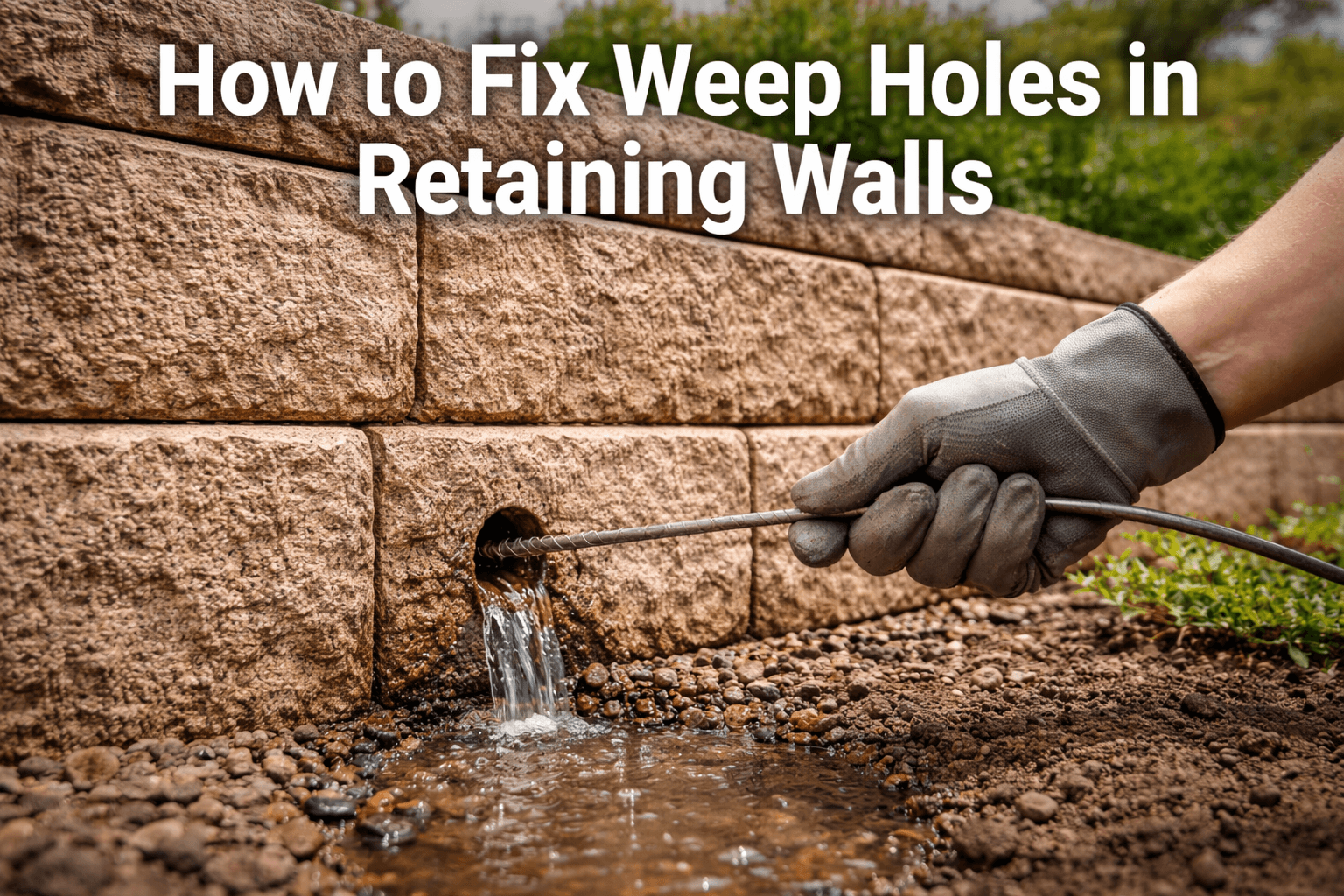
If you have a retaining wall on your property, those small openings near the bottom might not look like much. But they play a huge role in keeping your wall strong and stable. These openings are called weep holes, and when they get clogged or damaged, problems can start quickly.
Many homeowners ask how to fix weep holes in retaining walls once they notice water pooling, soil erosion, or pressure buildup behind the wall. The good news is that in many cases, repairs are manageable if caught early.
Let’s walk through what weep holes do, why they fail, and how to fix them properly.
What Are Weep Holes and Why Are They Important?
Weep holes are small drainage openings built into retaining walls. Their job is simple but critical: allow water to escape from behind the wall.
Without proper drainage, water builds up in the soil behind the structure. This creates hydrostatic pressure. According to civil engineering principles, water pressure is one of the leading causes of retaining wall failure.
When water cannot drain, you may see:
- Bulging or leaning walls
- Cracks in the structure
- Soil erosion at the base
- Water seeping through masonry
Understanding how to fix weep holes in retaining walls starts with understanding that drainage is the key to long term stability.
Common Reasons Weep Holes Fail
Before jumping into repairs, it helps to know what went wrong.
Clogged with DebrisOver time, dirt, mulch, or landscaping materials can block the openings.
No Filter FabricIf filter fabric or gravel was not properly installed behind the wall, soil can wash into the weep holes.
Crushed Drainage PipeSome retaining walls include perforated pipes behind the structure. If these collapse, drainage becomes ineffective.
Improper InstallationSometimes the wall was built without adequate drainage spacing.
Identifying the cause helps determine the right fix.
Signs You Need to Fix Weep Holes
You may need to learn how to fix weep holes in retaining walls if you notice:
- Standing water near the base of the wall
- Water stains on the wall surface
- Soil washing out from behind the wall
- Visible cracks or shifting
Catching these signs early can prevent more expensive structural repairs later.
How to Fix Weep Holes in Retaining Walls
The solution depends on the severity of the issue.
- Clear the BlockageIf debris is clogging the hole, use a stiff wire, screwdriver, or small plumbing snake to gently clear it. Avoid damaging the wall material.
- Flush with WaterAfter clearing visible debris, flush the weep hole with a garden hose to ensure water flows freely.
- Install Filter FabricIf soil continues entering the hole, you may need to excavate behind the wall slightly and add filter fabric and gravel to prevent future clogs.
- Add Additional DrainageIn some cases, installing a perforated drainage pipe behind the wall improves water flow significantly.
- Professional EvaluationIf the wall is leaning or cracking severely, consult a professional. Structural damage may require reinforcement or partial rebuilding.
Knowing how to fix weep holes in retaining walls can save you from costly wall replacement if addressed early.
Preventing Future Problems
Prevention is always easier than repair.
To maintain proper drainage:
- Keep landscaping materials away from weep holes
- Avoid covering openings with soil or mulch
- Inspect the wall after heavy rainfall
- Ensure downspouts do not discharge directly behind the wall
Good water management around your property protects not only the retaining wall but also your foundation and landscaping.
When to Call a Professional
If your retaining wall shows significant bowing, cracking, or separation, it may indicate deeper structural issues beyond simple clogged weep holes.
A contractor or structural specialist can assess whether:
- The footing is compromised
- Drainage systems need replacement
- Reinforcement is required
Learning how to fix weep holes in retaining walls is helpful, but knowing when the issue is structural is just as important.
Final Thoughts
Weep holes may be small, but they serve a big purpose. Proper drainage prevents hydrostatic pressure, protects structural integrity, and extends the life of your retaining wall.
If you notice drainage issues, take action early. In many cases, clearing blockages or improving drainage behind the wall is enough to restore proper function.
Understanding how to fix weep holes in retaining walls empowers you to protect your investment and avoid larger structural problems down the road.